



Children in England will be taught how to spot misinformation, manage money and “disagree agreeably” under a sweeping overhaul of the national curriculum, the government has confirmed ahead of its formal publication on Monday 30 November 2026. The package, led by Education Secretary Lucy Powell, makes citizenship lessons compulsory from primary school, builds national curriculum changes around digital and media literacy, adds a new statutory speaking-and-listening assessment in Year 6 and introduces a rewritten computing GCSE.
The details were released in stages across the weekend of 28 and 29 November 2026, with the full draft programmes of study and a public consultation due on Monday. Here is what has been announced so far, who has welcomed it, and where the concerns lie.
What is changing in the national curriculum
According to the BBC and the Department for Education (DfE), the reforms rest on four main pillars: a new statutory citizenship curriculum, stronger digital and media literacy, compulsory financial education, and a push on oral communication skills known as oracy.
Compulsory citizenship from primary school
Citizenship will run from key stage 1 to key stage 4. The DfE says it will give young people “an understanding of their community, British values and how to discuss issues respectfully and understand different points of view”. Content will develop with age: pupils in primary school will learn to recognise misleading content, while secondary pupils will move on to understanding bias.
Digital and media literacy, including AI
Pupils will be taught how algorithms and AI-generated content shape what they see online. Schools Week reports that digital and media literacy will be embedded across the curriculum, from English to computing and citizenship, rather than sitting in a single lesson. The government says the aim is to help children understand both the opportunities and the risks of new technologies.
The timing is notable. UK courts have already seen the consequences of unchecked AI output, as we reported when 25 UK hearings were hit by fake citations in 2026. Ministers argue that learning to question what a machine produces needs to start long before adulthood.
A new computing GCSE
A new computing GCSE will cover programming and computer science alongside practical skills. The Independent and Sky News report that the updated qualification will include lessons on data and artificial intelligence, giving teenagers a clearer path into technology careers as well as a grounding in how the systems around them work.
Financial education becomes compulsory
Perhaps the most closely watched element is financial education. MoneySavingExpert reports that it will become compulsory throughout primary and secondary school in all state-funded schools in England, including academies and free schools. Financial education was added to the secondary curriculum in 2014, but because academies and free schools were not required to follow it, many pupils missed out.
The DfE says financial literacy will be strengthened through citizenship lessons and through financial numeracy in maths. Sky News reports the focus includes teaching pupils about financial scams.
Consumer campaigner Martin Lewis, who has pushed for the change for 16 years, said it was “a chance to stop young people being sent out into a world of scams, dodgy deals and debt without the tools to cope”. He also stressed that “the key here is ‘compulsory'”, and noted that only one in three pupils remember being taught about money.
Oracy: speaking and listening gets a statutory test
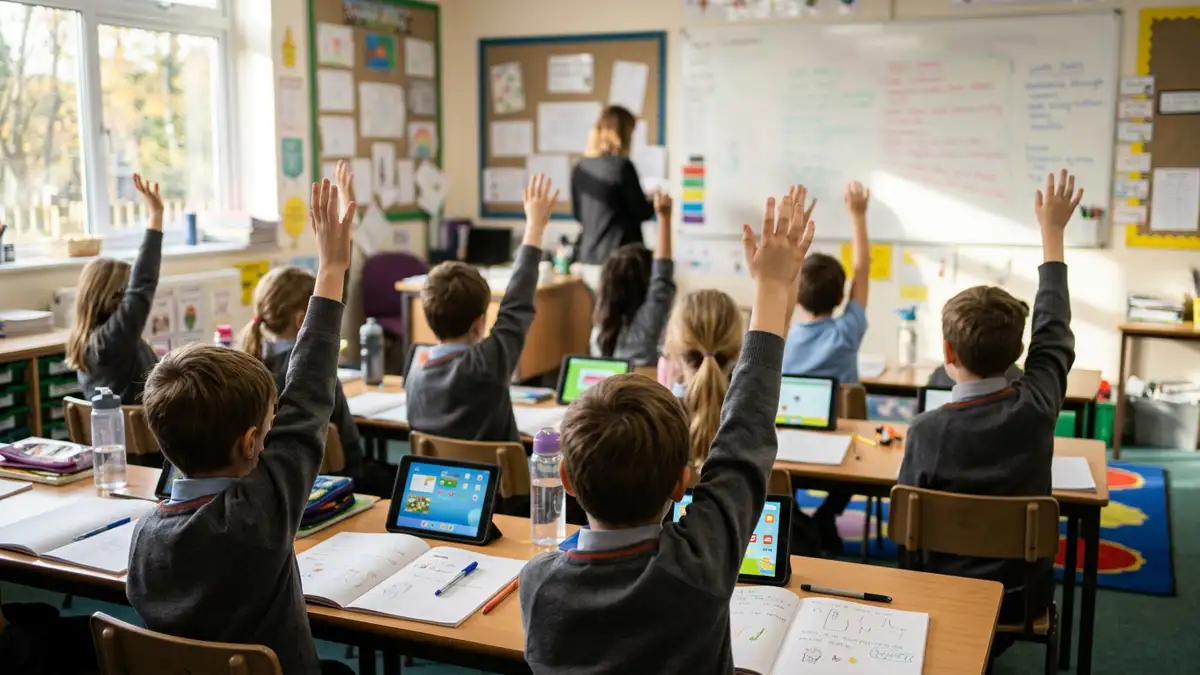
Primary schools will have to assess pupils’ oracy skills in Year 6. Schools Week reports that this means final-year primary pupils will face six statutory assessments: SATs in reading, maths, and spelling, punctuation and grammar, plus teacher assessments in writing, science and now oracy.
The DfE has said pupils will not sit an extra written paper, give a one-off speech or complete a single externally marked task. Instead, teachers will make a judgement based on activities already taking place in lessons throughout Year 6. It is not yet clear whether the results will be reported at school and national level in the way SATs scores are.
Geoff Barton, chair of the Oracy Education Commission and a former leader of the Association of School and College Leaders (ASCL), said the aim was to help pupils “understand ideas, to be able to explain, analyse and justify their views, to know how to disagree agreeably, and, in due course, to be able to take their place as active, engaged and informed citizens”. A new primary oracy framework will set out practical classroom approaches, with Amy Gaunt of Voice21 as lead drafter.
Reading for pleasure
The overhaul builds on an announcement made on Saturday 28 November 2026 that schools will be expected to set aside regular time for children to read for pleasure: every day in primary schools and every week for secondary pupils. Together with the oracy plans, ministers say the changes put reading, writing and speaking at the heart of a “broader and richer” curriculum.
Powell said every child would “build strong foundations in maths, reading, writing and speaking enabling them to access the full breadth of the curriculum”. She added that modernisation was needed “to equip young people for their fast-changing future, not some bygone past”.
Political reaction and the delivery question
Not everyone is convinced. Shadow education secretary Laura Trott called the plans “a shopping list of things that sound nice but erodes the core knowledge that has put English pupils in the world’s top 10 for reading, maths and science”. She added: “We need education policy that follows what has worked, not policy based on vibes.”
The Liberal Democrats’ education spokeswoman, Munira Wilson, has criticised the funding behind the plans, according to PiQ Markets’ summary of the coverage. School leaders have raised practical worries too. Pepe Di’Iasio, general secretary of ASCL, said: “Many schools do not have trained citizenship teachers, and timetables are overcrowded with existing expectations.” He also questioned why another statutory assessment was needed in Year 6 and what additional pressure it would put on children and schools.
Even Martin Lewis, a strong supporter, warned that the reform “will need teacher training, resources for schools and enthusiasm”. Schools Week also pointed out that the DfE is again releasing policy in small announcements over a weekend, despite its own staff wellbeing charter promising updates “only during working hours”.
What it means for families in Greater Manchester and beyond
The reforms apply to state-funded schools in England, so pupils in Manchester, Salford, Trafford and the rest of the North West would be covered, while Scotland, Wales and Northern Ireland set their own curricula. For parents, the most visible changes are likely to be more regular reading time at home and school, a growing emphasis on talking and listening, and money lessons that start earlier than many adults experienced.
Nothing is final yet. The Curriculum Review led by Professor Becky Francis recommended strengthening financial education and improving how it is taught, and the government is expected to publish draft programmes of study and open a consultation on Monday. Teachers, parents and others will be able to respond, and MoneySavingExpert says Lewis will submit his own response and urged others to do so.
What to watch next
- The draft programmes of study: due on 30 November 2026, these will show how much time each new element will take.
- The consultation: when it closes, and how many teachers and parents respond.
- Funding and training: whether the government commits money for citizenship teacher training and new resources.
- Year 6 workload: how the oracy assessment is reported, and whether it adds to pressure on primary schools.
- The computing GCSE: the final content and when the first pupils will sit it.
For now, the headline is clear: schools in England are being asked to prepare pupils not just to pass exams, but to question what they read online, handle money wisely and hold their own in a debate. Whether the classroom time, funding and trained staff arrive to match that ambition will decide how much of it reaches pupils. Further reading: the BBC’s report on the curriculum changes.


