




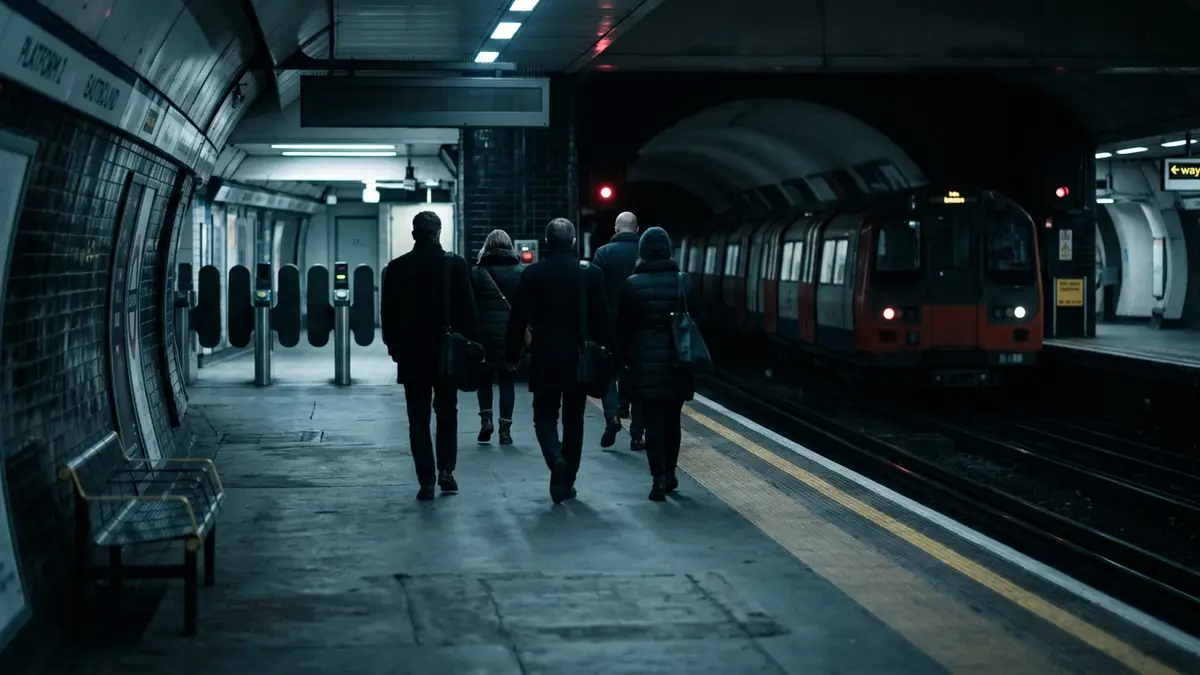
The first Tube strike of a new eight-date campaign began at midday on Thursday 26 November 2026, with members of the RMT union walking out in a dispute over how London Underground drivers work. Services are running at a fraction of normal levels, the Piccadilly and Circle lines are shut for the whole day, and no Tube trains will operate anywhere on the network after 21:00.
Transport for London (TfL) says the action will last until 11:59 GMT on Friday 27 November 2026. It is the opening round of eight planned walkouts that the union says will run from now until the end of February 2027, so anyone who relies on the Underground will need to plan around repeated disruption through the busy Christmas period.
Tube strike: what is running and what is not
According to TfL, as reported by the BBC, the Piccadilly and Circle lines will have no service at all on Thursday. The Waterloo & City line closes from midday. All other lines were due to run a reduced service from 10:00, with disruption building from midday, and the network will shut entirely after 21:00.
Friday will not be a normal day either. All lines are expected to start late, and TfL has warned that disruption could last until about 18:00 before services return to normal.
The Elizabeth line, the Docklands Light Railway, London Overground, buses and trams are not affected by the strike. They will, however, be busier than usual, so commuters should allow extra time.
Practical advice for travellers
- Check the TfL status page or app before leaving, because the picture changes through the day.
- Where possible, work from home, travel outside the peak or switch to the Elizabeth line, DLR and Overground.
- Expect crowded buses and longer queues at interchange stations.
- Walking and cycling are realistic for shorter journeys in central London.
What the RMT dispute is about
At the centre of the row is London Underground’s plan for an optional four-day working week for train drivers. Under the proposals, most drivers would see their working week fall from 36 hours to 35 hours, while their contracted hours stay the same because paid meal breaks would be introduced. In practice, drivers would work longer days but fewer days each week.
London Underground says the scheme gives staff a real choice. Nick Dent, its director of customer operations, said the plan would “give our colleagues a real, meaningful choice on their working pattern”. TfL has since added a further option allowing drivers to stay on a five-day pattern, with a guarantee that they will remain at their current depot.
The RMT is not persuaded. General secretary Eddie Dempsey said there was “nothing voluntary about a scheme that forces drivers to give up existing protections”. The union argues that the longer shifts risk driver fatigue and could compromise safety, and it has previously said a four-day week should not be used as a vehicle for job cuts or for intensified working. It wants a 32-hour week spread over four days, which would mean three fewer hours a week for the same pay.
Mr Dempsey said the union had suspended strikes three times to allow talks but had not seen “real improvements”. Talks held on Tuesday 24 November 2026 ended without agreement, and the strike went ahead.
Aslef accepted the deal, which limits the impact
Two unions represent Tube drivers: the RMT and Aslef. Aslef has accepted the proposals and its members are not taking part this time. The BBC reports that only RMT drivers, roughly half of the total number on the network, are walking out.
That matters for the scale of disruption. When Aslef joined the RMT in strike action last year, almost all Underground services were halted. This time, a significant share of drivers are expected to be at work, which is why TfL is able to promise a reduced service on most lines rather than a complete shutdown.
The BBC also reports that more than half of Tube drivers, including some Aslef members, turned up to work during the June strike after accepting the proposals.
How much disruption did earlier strikes cause?
The RMT staged four days of strike action across April and June 2026. During the June strikes, services started late and finished early, with no service before 06:30 BST or after 21:00 on most lines. TfL ran no service on the Circle line or the Waterloo & City line, while the Piccadilly, Metropolitan and Central lines were severely disrupted. About 90% of Jubilee line services operated.
TfL’s own figures for the Thursday of the June strike showed the wider effect on how Londoners got around:
- Tube journeys fell by 40%.
- Elizabeth line journeys rose by 18%.
- Cycling increased by 22%.
- Roads were 10% busier.
- DLR journeys rose by 7%, and bus usage and Overground journeys were up 4%.
Those numbers suggest that many people simply stay away from the centre or change their mode of travel, and that other rail services absorb a large share of the displaced demand.
Why the timing matters for businesses and shoppers
Strikes that begin in late November and continue into the new year land at the worst possible time for London’s hospitality, retail and theatre sectors, which depend on December footfall. Each strike runs from midday for 24 hours, so it affects two calendar days, including an evening on the first day when many people travel to shops, restaurants and shows.
Employers also face a repeated planning headache. With eight dates in the programme, firms that rely on staff commuting by Tube will need contingency arrangements that can be switched on at short notice. The cost of living is already a pressure on household budgets this winter, as we reported in our opinion piece on the energy price cap rise, and extra travel costs or lost working hours will add to that for many Londoners.
What happens next
There is no sign yet of a breakthrough. TfL maintains that the offer is voluntary and fair, and that drivers can stay on five days. The RMT says the scheme still erodes agreements that have been negotiated over many years. The union has suspended strikes three times for talks, and has now shown it is prepared to walk out when it does not see real improvements.
The pressure on the mayor’s office is also likely to grow, with each walkout drawing more attention to how the capital’s transport is run. Readers outside London should note that the disruption can ripple outward, because commuters and visitors travelling into the capital by national rail still need onward connections once they arrive.
For wider context on how safety and public services are being debated across the UK this week, see our report on the knife licensing scheme for UK sellers.
Key points to remember
The Tube strike runs from midday on Thursday 26 November 2026 until 11:59 GMT on Friday 27 November 2026. The Piccadilly and Circle lines are closed all day Thursday, no Tube trains will run after 21:00, and Friday will see a late start with disruption until about 18:00. The Elizabeth line, DLR, Overground, buses and trams are running as normal but will be crowded.
Full and live updates are available from Transport for London, and the dispute background is set out in the BBC News report on the strike. Further strike dates will be confirmed by the union and TfL as the programme continues into 2027.


