




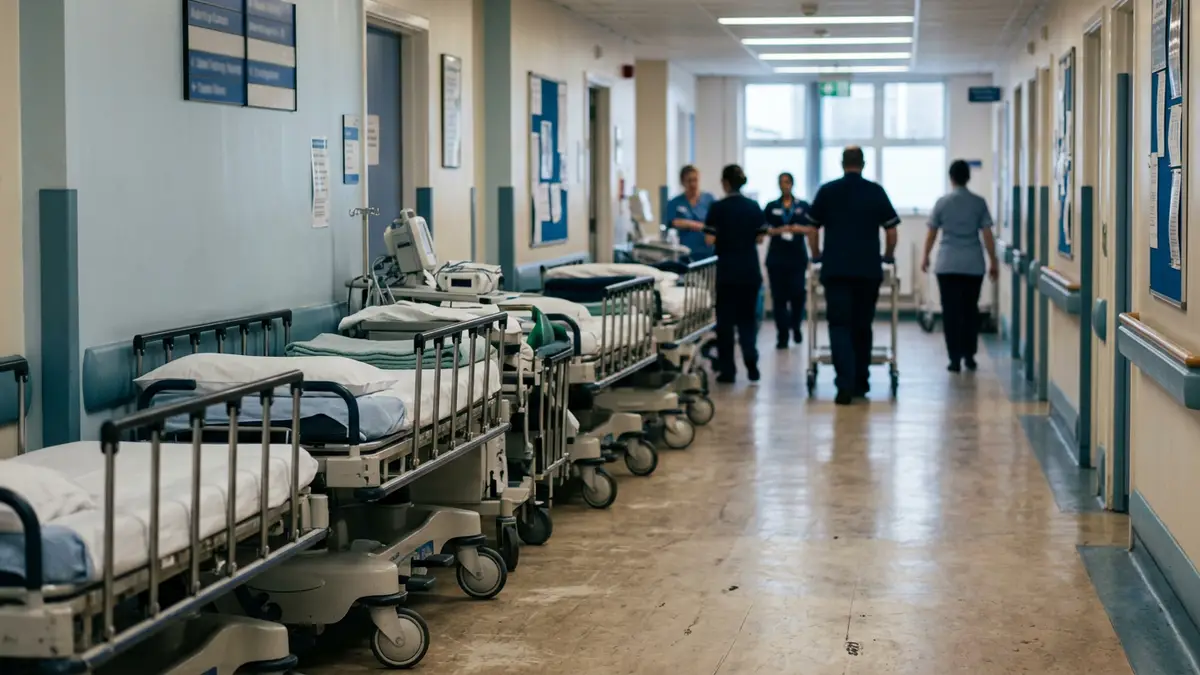
Flu hospital admissions in England jumped by almost 80% in a single week, according to figures published by the UK Health Security Agency (UKHSA) on 26 November 2026. The rate rose from about 5.0 to almost 9.0 per 100,000 people in the week ending 22 November 2026, the highest for this point in November since before the Covid pandemic. With vaccination uptake lagging in the groups most at risk, health leaders are warning that the next fortnight will be hard for hospitals.
What the flu hospital admissions figures show
The weekly surveillance report covers 16 to 22 November 2026. UKHSA says influenza is now circulating at moderate levels, while Covid-19 and respiratory syncytial virus (RSV) are both rising from low levels. Reporting on the data, the Guardian and the BBC put the admission rate at around 9 per 100,000, against 4.9 per 100,000 at the same point last year, meaning this year’s rate is nearly double.
UKHSA’s lead epidemiologist, Dr Ellen Fragaszy, said flu levels were “rising sharply” and that RSV was continuing to increase, particularly in children under five. Laboratory positivity for influenza also climbed in the week, with the dominant strains reported to be influenza A subtypes.
The picture is also uneven across the country. The BBC reported that admissions in the South East almost tripled in a week, while the South West saw a rise of about a quarter. Dr Suzanna McDonald, UKHSA’s national lead for the flu programme, said flu had arrived “a few weeks ahead” of last year but was “very, very unpredictable”. She pointed out that last winter also began early yet peaked at only moderate levels.
Hospitals brace for more pressure
Sir Jim Mackey, chief executive of NHS England, told an NHS Alliance conference in London that more hospital beds were occupied by flu patients than at the same time last year. His “instinct”, he said, was that the surge would build over the next five to 10 days and begin to feel like “proper winter” within a fortnight.
At the Royal Berkshire Hospital in Reading, more than 570 patients came through the emergency department in one 24-hour period last week. Dom Hardy, the trust’s chief operating officer, told the BBC it was probably the second busiest day the department had ever had and that flu “won’t have met its peak yet”. He asked people with minor illnesses to use a GP, a pharmacy or NHS 111 online, warning that those who are not seriously ill face long waits in A&E.
Some hospitals, including Queen Alexandra Hospital in Portsmouth and Wexham Park Hospital in Slough, have encouraged people to wear masks in certain areas. Other trusts say they are keeping mask guidance under review and are relying on existing winter plans to manage local surges.
Flu vaccine uptake: who is still unprotected
The most worrying part of the data may be who has not yet been vaccinated. UKHSA says almost 9.5 million people under 65 in clinical risk groups are eligible for a free flu jab in England, but only 34.1% had received one by 22 November 2026. That leaves almost 7 million people without protection.
Other uptake figures published the same day:
- People aged 65 and over: 67.6%, behind where officials want the programme to be at this stage of the season.
- Pregnant women: 34.9% in the week ending 22 November.
- Two- and three-year-olds: 39.2% in the week ending 22 November.
- School-age children: 32.1% across September and October.
- Healthcare workers: 33.9% across September and October.
The BBC notes that uptake among young children and over-65s is lower than at the same point last year. UKHSA cites clinical evidence that the relative risk of death from flu is far higher for some groups, as much as 48 times greater for people with chronic liver disease than for the general population. Charities have echoed the warning: Asthma + Lung UK says people with lung conditions such as asthma and COPD are seven times more likely to die from flu, while Kidney Care UK says people with stage 3 to 5 chronic kidney disease are 19 times more likely to die from it.
Is it too late to get a flu jab?
No. A GP in Oxfordshire, Dr Rachel Ward, told the BBC it was not too late, though the vaccine takes around two weeks to reach its full effect. Anyone vaccinated now should therefore be protected over Christmas. The BBC also reports that school-age children who missed the nasal spray vaccine at school can get it at some pharmacies from 1 December 2026.
UKHSA advises anyone unsure about eligibility to ask their GP practice or pharmacy. Eligible groups include older adults, pregnant women, young children and people with long-term conditions such as chronic liver, neurological or respiratory disease, or a weakened immune system. The official NHS flu vaccination pages explain how to book.
Why flu is arriving early and what it means for the North West
Doctors say several factors combine at this time of year. Colder weather pushes people indoors, and gatherings in the run-up to Christmas give viruses an ideal route to spread. Early flu also overlaps with RSV, which is keeping children’s emergency departments busy, and with rising Covid-19 activity.
The regional detail published so far focuses on southern England, and UKHSA has not said the North West is seeing the same spike. Even so, Greater Manchester hospitals normally face the same winter demand, and the region has other pressures this season. Manchester Times has reported on children in temporary accommodation across Greater Manchester, a reminder that cold, crowded housing can add to winter health risks. Parents are also dealing with other worries about young people’s health, including the drug-laced vapes found in a Met Police school pilot.
What people can do now
- Book a flu vaccine if you are eligible, and do it this week so protection is in place before Christmas.
- Use a pharmacy, GP or NHS 111 online for minor illness rather than A&E, as hospital leaders have asked.
- Stay at home if you have flu symptoms, particularly around older relatives, pregnant women and anyone with a weakened immune system.
- Seek urgent care for breathing difficulty, confusion or symptoms that worsen quickly.
What happens next
UKHSA publishes its surveillance report every week, and the next update will show whether the sharp rise continues. Hospital leaders expect pressure to build further before it eases. Whether this winter peaks at moderate levels, as last year’s early season did, or turns out worse is the question officials say they cannot yet answer. For the millions of eligible people still unvaccinated, the advice from the NHS and UKHSA is the same: do not wait.
Sources: UKHSA, 26 November 2026; BBC News, 27 November 2026; The Guardian, 26 November 2026.


