




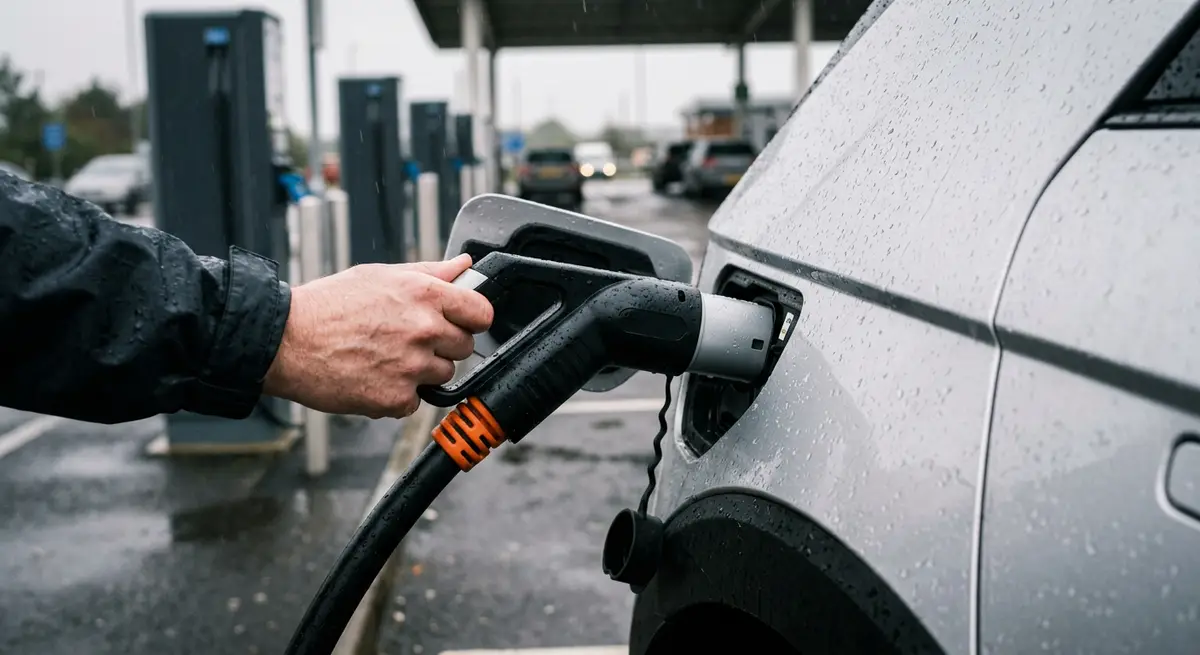
Electric car drivers who depend on public rapid chargers could be paying more than £1 per kilowatt-hour next year, according to warnings from one of the UK’s charging networks and an industry newsletter, because of a steep rise in the fixed fees operators pay to connect to the grid.
Charging operator Zest and EV newsletter The Fast Charge say the problem is not the cost of electricity itself but the standing charges levied by regional distribution network operators on every charger, whether or not it is being used.
Fees that apply before a car plugs in
According to figures reported by the Daily Mail, the average weekly standing charge has risen from £61.47 in 2021 to £440.13 this year, and is estimated to reach £541.73 per charger in 2027 based on tariffs already published by the network operators and the National Energy System Operator.
The Fast Charge calculates that the average price at a public rapid charger (50kW to 149kW) would rise from 79p per kWh today to £1.03 next year. At that level, it says, a Tesla Model Y Long Range charged only at rapid units would cost more than 20p per mile, against around 15p per mile for a Nissan Qashqai hybrid at today’s pump prices.
The rise stems from an Ofgem decision, which took effect in 2022, to bill charging sites on the capacity they could draw rather than the energy they actually use. Zest chief executive Robin Heap told Top Gear that charging hubs run at less than 10 per cent of their peak capacity across a typical 24 hours, meaning operators pay for far more grid connection than they use.
Rapid charging businesses are on course to pay around £336 million in grid charges this year, rising to £413 million in 2027 even if no new chargers are installed, according to the figures cited.
‘A feudal tax’
Tom Riley, editor of The Fast Charge, said: “Grid standing charges are effectively a feudal tax, enabled by Ofgem without proper thought, with money going from a driver’s pocket straight to energy networks.”
Tanya Sinclair, chief executive of campaign group Electric Vehicles UK, said the system penalised drivers who cannot charge at home. “Electric motoring should be cheaper and more accessible for everyone, not a privilege reserved for households with driveways,” she said.
Freedom of Information requests made on behalf of the campaigners suggest the Treasury has been aware of the issue for some time. A review of public charging costs published by the Department for Transport and the Office for Zero Emission Vehicles at the end of October acknowledged that standing charges were a barrier, stating that “Ofgem must urgently address this tension”. Two proposals to reduce the charges have been under discussion in industry working groups for three years without reaching the regulator for a decision. Ofgem has not yet issued a formal public response to the latest report.
What it means for Manchester drivers
The warning matters most for drivers who cannot install a home charger, a group that includes many households in flats and terraced streets without off-street parking. Research for Kwik Fit, reported by Garage Matters, found that the inability to charge at home has climbed to the second-biggest barrier to buying an electric car, cited by 35 per cent of drivers, level with range anxiety.
Drivers who do charge at home would also feel the change on longer trips, such as a run down the M6 or across the Pennines on the M62, where rapid chargers at service areas are the only practical option. A government fund of £100 million announced last month to cut charging costs applies only to local, lower-powered chargers, not to the rapid units on motorways and major roads.
Owners of petrol and diesel cars, meanwhile, are seeing pump prices fall, which narrows the running-cost advantage that has been one of the main selling points of electric cars.
What happens next
The 2027 tariffs are already published, so unless Ofgem changes the charging methodology, operators face the higher bills from next year. Networks will have to decide whether to raise prices or absorb losses at lightly used sites, and campaigners are pressing the regulator and ministers to act before then.
The debate comes as the government consults on its zero emission vehicle targets, adding to uncertainty for anyone weighing up whether to switch to electric in the year ahead.

