




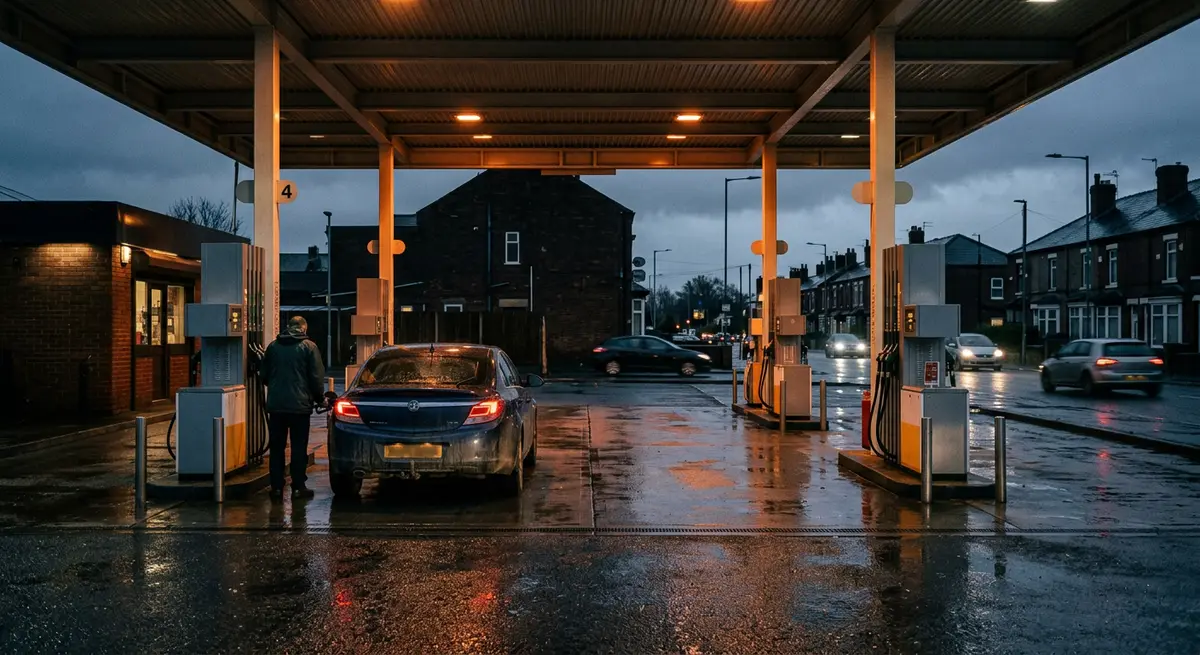
Petrol prices could fall below 150p a litre within weeks if retailers pass on the full drop in wholesale costs, according to new analysis from the RAC, which says drivers are still not getting the benefit of cheaper oil.
The motoring organisation’s latest Fuel Watch figures, published on Tuesday, show oil trading consistently below $100 a barrel for the first time since August as tensions between the United States and Iran ease. The wholesale price of unleaded has slipped back to where it stood when the conflict began, while diesel has fallen too, though by less.
Pump prices lag behind
Forecourt prices have come down since the record highs of 5 October, when diesel passed £2 a litre for the first time. But the RAC says petrol is only 7.8p a litre cheaper since then and diesel just 3.6p, leaving averages a little under 165p and 195p respectively.
On its calculations, a full pass-through of wholesale savings would take petrol under 150p, a level last seen in late March, and diesel to around 190p. That would cut £8.25 from the cost of filling a typical 55-litre family petrol car and £2.75 from a diesel.
RAC head of policy Simon Williams said: “Granted, prices have fallen a little in recent weeks but nowhere near as much as drivers would reasonably have expected them to, based on wholesale prices being down considerably. They should really be seeing far greater benefit at the pumps.”
He pointed to the Competition and Markets Authority’s warning in the summer that wholesale falls earlier in the year had not been passed on quickly, adding: “We fear history might be repeating itself.”
A price cut by one of the big supermarket chains last Thursday was matched by its three main rivals, but the RAC argues the reductions should be much larger across the market. Northern Ireland continues to stand apart, with petrol averaging 159.2p and diesel 189.2p.
AA: price-matching is slowing the fall
The AA paints a similar picture. Its figures, reported by Fleet News, put the UK average for petrol at 165.2p at the start of this week, 9.5p below the 174.7p peak in the first week of October. It expects the fall to reach 10p a litre this week, with diesel starting the week at 195.4p.
The AA says the decline has been slower than the drop in wholesale costs would suggest, partly because retailers are matching each other’s prices rather than racing to undercut. Its spokesperson on pump prices, Luke Bosdet, said average petrol prices were “back to where they were in early September, yet there are small communities charging prices last seen in July this year.”
He added that, unlike in previous price wars, it is now mainly apps built on the government’s Fuel Finder data that point drivers towards the cheapest pumps, and urged motorists to use them.
What it means for Manchester drivers
Drivers in and around Manchester are paying slightly less than the national average. Fuel Finder figures for 16 November, analysed by Manchester Business Daily, put unleaded (E10) at an average of 162.4p across 94 forecourts in the Manchester postcode area, 1.6p below the UK figure of 164.0p.
The spread between forecourts is wide. Unleaded ranged from 149.9p at the cheapest site, a Murco station in the M38 postcode, to 173.9p at the dearest. Diesel averaged 193.1p locally, with prices running from 183.9p to 199.9p. For a driver filling a 55-litre diesel tank, that 16p gap is worth almost £9.
The direction of travel is down. Of the 63 Manchester forecourts that reported diesel prices on both 9 and 16 November, 59 cut their price over the week and none raised it. Supermarket sites remained the cheaper option for diesel, averaging 190.2p against 194.5p elsewhere. Across the wider North West, diesel averaged 194.3p and unleaded 164.3p.
For households and small firms that rely on a car or van, the practical advice from both motoring groups is the same: check prices before filling up, because the cheapest forecourt nearby may be several pence a litre below the one on the main road.
What happens next
Much depends on oil. The RAC notes that both of the conflicts that pushed prices up this year, in the Middle East and in Ukraine, are unresolved, and that 2026 has shown how quickly crude can swing. For now, easing tensions, rising supply and talk of an oversupply next year are pulling oil prices lower.
If wholesale costs hold at current levels, motoring groups expect pump prices to keep falling over the coming weeks. Whether petrol actually breaks below 150p on average will depend on how quickly the major retailers, and the supermarkets in particular, decide to follow the market down.

