




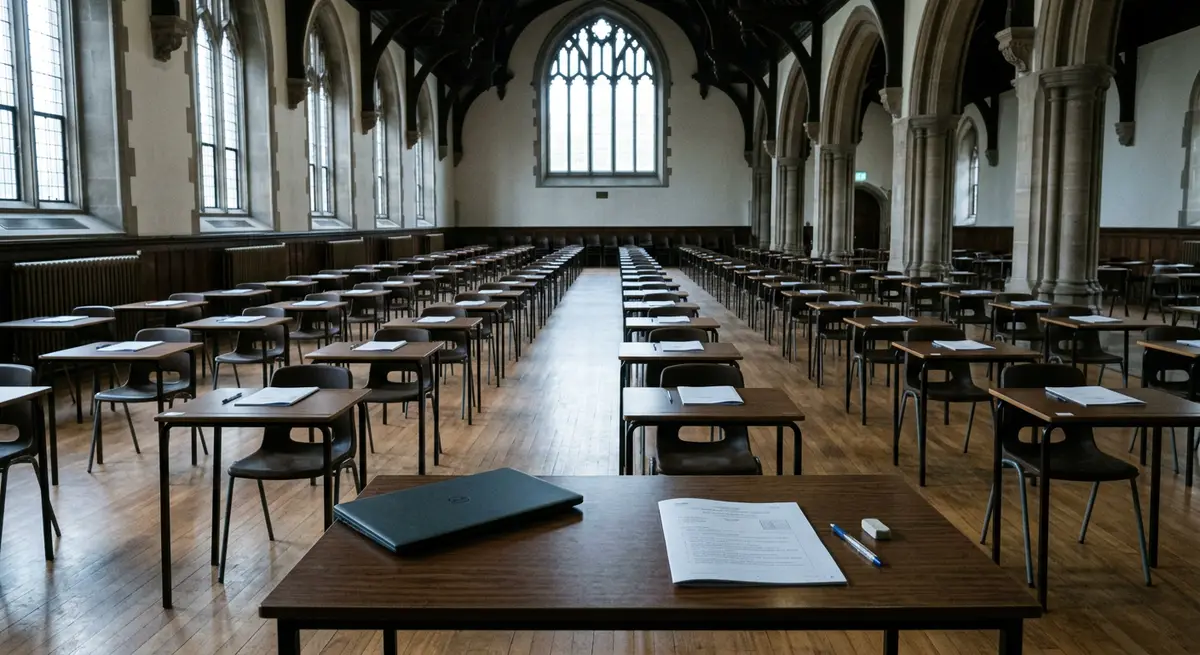
Universities in England have been told to make much greater use of supervised, AI-free assessment after the higher education regulator found that students can complete some coursework to a high standard with artificial intelligence, in some cases in just a few minutes.
The Office for Students (OfS) said the credibility of degrees was at risk because “a significant proportion” of assessments are taken in unsupervised formats where AI tools are easily available. It warned that institutions failing to run valid and reliable assessments could face regulatory action.
What the research found
The findings come from joint research by the OfS and Advance HE, a charity that works on teaching standards in universities. According to the BBC, it drew on the views of 244 staff and 91 students from at least 127 universities and colleges.
Students described peers who had finished assessments using large language models in minutes and received grades similar to those who had done the work themselves. Some said classmates could not recall basic details of work they had just handed in. The report concluded it was “frequently possible” for students to use AI in ways that cannot be reliably detected.
Staff told researchers they were receiving batches of submissions that looked alike, cited the same sources and were written in the same style. One staff member quoted by the Guardian said pervasive AI use “may render our assessment of students close to impossible in some areas”.
Josh Fleming, the OfS director of strategy and delivery, said AI was a “huge opportunity” for higher education but also “a generational risk to the system as it stands, threatening to undermine students’ learning and institutions’ ability to assess them”. He added: “We need to see far greater efforts to tackle these risks, including far greater use of AI-free assessment.”
What the regulator wants universities to do
In its response to the research, the OfS said it would require institutions to ensure assessments genuinely measure students’ knowledge and skills, which in many cases will mean secure, AI-free formats such as closed-book exams, presentations, practical tests and oral examinations known as vivas.
Where institutions fall short, the regulator said it could impose specific conditions of registration, issue fines, or suspend access to student support and grant funding. Under separate proposals now being consulted on, universities that miss quality standards could also be barred from charging higher tuition fees or face caps on student numbers.
The research was not wholly negative about AI. Students said they saw AI skills as important for their future careers and wanted more chances to develop them, while many found their university’s AI rules hard to understand.
What it means for Manchester readers
Greater Manchester is home to one of the largest student populations in the country, spread across the University of Manchester, Manchester Metropolitan University, the University of Salford and the Royal Northern College of Music, among others. Students starting or partway through degrees in the city could see more of their marks come from timed exams, in-person presentations and vivas, and fewer from take-home essays.
Universities UK, which represents more than 140 institutions, said many had already made “substantial changes”, including more in-person exams, vivas and assessments that use AI in a controlled way. It said different subjects would need different approaches.
Lewis Wilson of the National Union of Students said AI was exposing “traditional” methods that students and staff had long criticised, and called for assessment designed with students.
What happens next
The OfS has published guidance on how its existing rules apply to AI and says it will carry out further research into how the technology is changing higher education. Advance HE plans to launch an AI-focused leadership programme for universities early in 2027. The Department for Education said it expected the regulator to enforce standards and to make its framework on AI “explicit, strong and durable”.

