




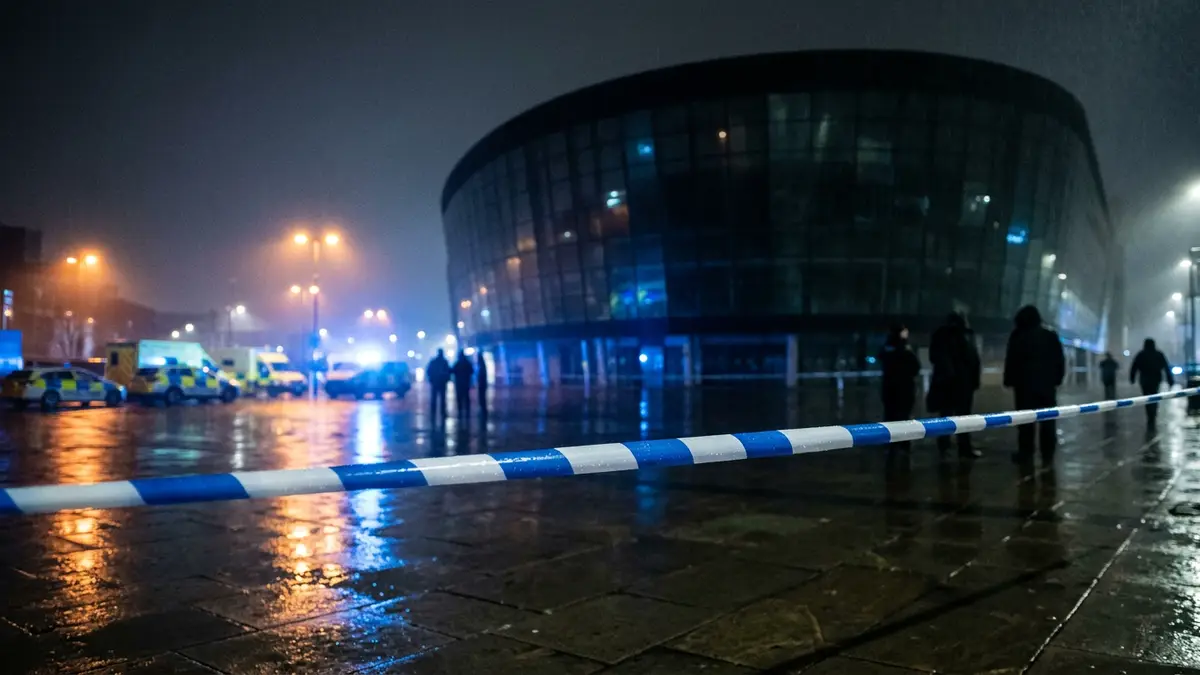
The Co-op Live evacuation on the night of 22 November 2026 has left Greater Manchester Police trying to answer two questions: what was released into the crowd at Don Toliver’s concert, and how it got inside the UK’s biggest indoor arena in the first place. By 24 November 2026, 89 people had been treated for symptoms, one woman had been taken to hospital, more than 12,000 fans had been led out of the building and nobody had been arrested.
Here is what is known so far, what remains unclear, and what it means for fans who were there or who hold tickets for future shows at the east Manchester venue.
What happened at the Co-op Live evacuation
The US rapper was roughly 40 minutes into his set, part of the UK leg of his Nitrous / Octane world tour, when the show stopped at about 10pm. Fans in the standing area described a pop, a sharp chemical smell and an immediate burning in the eyes and throat. Within minutes the house lights came up, the performer left the stage and people began streaming towards the exits.
Greater Manchester Police (GMP) said venue staff alerted officers shortly after 10pm, and a major incident was declared at 10.25pm. That status allows police, paramedics, fire crews and the council to pool resources quickly under a single command. It was stood down at around 4am on 23 November 2026.
The North West Ambulance Service sent several crews, including its Hazardous Area Response Team, a specialist unit trained for chemical and contaminated scenes. In its latest update, GMP said 89 people showed symptoms it believes were linked to exposure to the substance. One woman was taken to Manchester Royal Infirmary for further assessment and treatment. The remaining 88 went through what police called dry decontamination at the scene and were then looked after inside the neighbouring Etihad Stadium while the operation continued.
Hazmat suits and the Etihad Stadium
Several of those affected have described being asked to remove outer clothing and shoes, being wiped down and handed protective suits, slippers and masks before being taken across the Etihad Campus to be observed. Some told the BBC they were still suffering headaches, chest pain and sore throats the following day. Dry decontamination is a standard precaution when an unknown irritant is involved: removing clothing gets rid of most of any residue without the need for showers on site.
Was it tear gas? What police have said
Police initially believed the substance was tear gas, and many fans have used that description. But as of 24 November 2026, GMP has not confirmed what was released. Assistant Chief Constable Tom Harding said enquiries were continuing “to establish the nature of the substance, where it came from and any associated risk”, with testing carried out on items recovered from inside the arena. Forensic officers in white overalls were seen going in and out of the building on 23 November 2026, and a cordon remained around the entrances.
The force has described it as an isolated incident and says there is no wider threat to the public. It also says detectives are still working out whether a crime has been committed at all, which is why no arrests have yet been made.
Some accounts given to reporters point to a deliberate act. One concertgoer told the Manchester Evening News he was sprayed directly in the face with a canister while in a mosh pit, and others have described a red flare being lit in the crowd shortly before the music stopped. Those accounts have not been confirmed by police, and it is not yet known whether the flare and the substance were connected. Fans have also claimed that spray or gas was released at earlier dates on the same tour in Zurich and Paris.
Anyone who was at the gig and has since felt unwell has been urged by GMP to visit NHS 111 online, contact their GP or go to their local hospital. Information about the incident can be passed to police on 101.
Co-op Live security under scrutiny
The most pressing question for the venue is how a canister, and possibly a flare, made it past the doors. Several fans told the BBC and local press that bags were not checked on the way in. One said he had to ask staff whether they wanted to look inside his. Others described stewarding outside the building as thin once people began leaving.
Co-op Live says on its website that it uses a range of security measures, some visible and some not, including “frictionless” screening technology designed to detect prohibited items without visitors having to empty their pockets. That kind of walk-through system is now common at large arenas and stadiums. It is mainly designed to pick up weapons and explosives, the items that could cause mass casualties, rather than small aerosol cans.
Figen Murray, whose son Martyn Hett was killed in the 2017 Manchester Arena attack and who campaigned for the law that now places security duties on public venues, told the BBC that people should feel reassured by the screening big venues use, though she said the technology would need to become more sophisticated over the coming years. Her campaign led to the Terrorism (Protection of Premises) Act, often called Martyn’s Law, which requires larger venues to plan for and reduce the risk of attacks.
A Co-op Live spokesperson said the arena was working closely with GMP to identify the cause and “action appropriately”, adding that the safety of visitors remained its priority and that it would say more once police had an update.
A difficult history for the arena
Co-op Live, which opened in 2024 next to the Etihad Stadium with a capacity of around 23,500, has worked hard to rebuild its reputation after a troubled launch that saw several opening shows postponed. It has since become a regular stop for major tours, and Manchester Times recently covered Muse launching their latest arena tour at Co-op Live. How the venue responds to the questions raised this week will matter to the many promoters and fans who now rely on it.
Don Toliver reschedules London shows
The fallout has spread beyond Manchester. Promoter Live Nation said the rapper’s stage and production equipment was still held at Co-op Live and could not be moved in time for his London dates. His show at The O2 on 23 November 2026 has been moved to 15 December 2026, and his Wembley Arena date, which was due to be the final night of the tour, has been moved to 14 December 2026. Tickets for the original dates remain valid.
In a post on social media, Toliver, whose real name is Caleb Zackery Toliver, said his thoughts were with those hurt in Manchester and told fans to stop bringing things into his shows. The 32-year-old, known for tracks including No Idea and After Party, has received five nominations for the 2027 Grammy Awards, including Best New Artist.
Refunds for Manchester ticket holders
Live Nation has said that everyone with a ticket for the Manchester show will receive a full refund, processed automatically, so fans do not need to apply. Anyone who bought through a resale platform or a third party should check with the seller if money has not arrived within the usual refund window. Fans who incurred travel or hotel costs are unlikely to recover them through the ticket refund, though some travel insurance policies cover cancelled events.
Reaction from political leaders
Greater Manchester Mayor Bev Craig thanked the emergency services and venue staff for their professionalism and said enquiries needed to continue “so those affected can get the answers they deserve”. The Prime Minister’s official spokesperson said his thoughts were with everyone affected, described the incident as deeply worrying and said police should be left to carry out their investigation.
What happens next
The immediate priority for GMP is identifying the substance. Laboratory results should show whether it was a commercially available irritant such as pepper spray or CS gas, both of which are classed as prohibited weapons in the UK, or something else. That finding will shape whether the case becomes a criminal investigation, and it will also tell health services whether anyone exposed needs follow-up care.
The second strand is likely to be a review of entry procedures at Co-op Live, and possibly of how the arena works with tour security teams. Licensing authorities and the venue’s own safety advisers will want to know what screening was in place on the night, how many staff were working the doors, and how long it took to get people out once the problem was spotted.
For the 12,000 people who were inside, and especially for the 89 who needed treatment, the wait for answers goes on. More detail is expected once testing is complete. Readers following the wider pressures on local health services this winter can also read our report on rising A&E waits across Greater Manchester.
Sources: Greater Manchester Police statements of 22 and 23 November 2026; BBC News; Greater Manchester Police; Live Nation; Manchester Evening News.

