



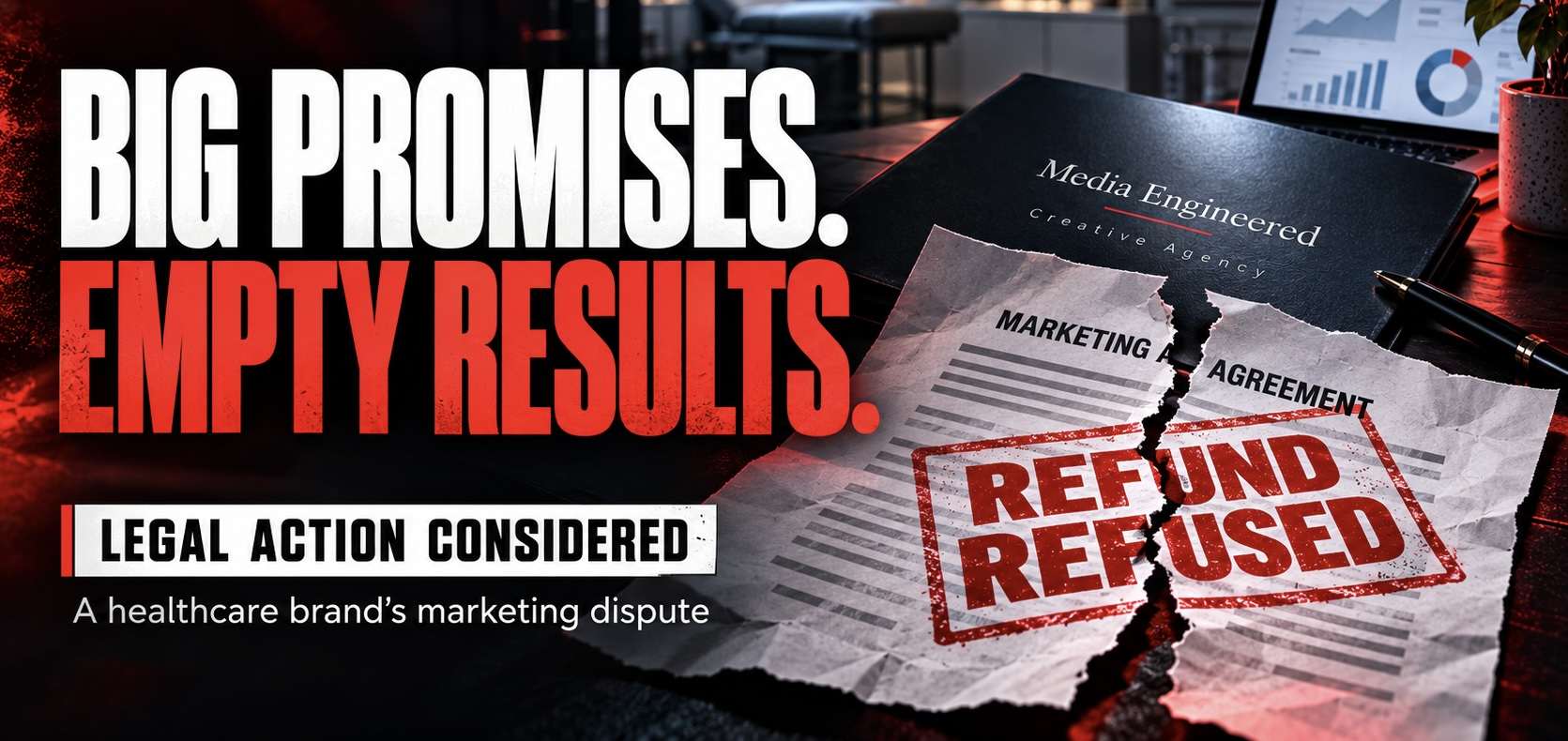
When a growing healthcare brand hired an advertising agency, it expected professional campaigns, transparent reporting and a reliable partner to help attract new enquiries.
The agency promised a dedicated account manager, tailored advertising and regular updates. Once the contract was signed and payment was made, however, the experience changed.
Campaigns launched late. Advertisements contained inaccurate service descriptions, and corrections supplied by the healthcare team were repeatedly overlooked. Promised meetings were postponed, while requests for updates received vague assurances that the campaigns “needed more time”.
As the weeks passed, meaningful enquiries remained scarce. When the brand requested a clear breakdown of advertising activity, it received selected screenshots showing clicks and impressions, with little explanation of whether these produced genuine patient enquiries.
“We understood that marketing results aren’t guaranteed,” the founder said. “But delivering the agreed work, correcting mistakes and answering reasonable questions should be.”
The brand raised a formal complaint, citing missed deliverables, reporting concerns and unresolved errors. Requests to speak with senior management went unanswered, and the agency offered no clear corrective action plan.
In an attempt to settle the matter, the healthcare brand proposed a partial refund. The agency refused, leaving the parties without an agreed resolution.
The healthcare brand is now considering legal proceedings to recover funds paid, alleging that the agency failed to deliver the contracted services. Its decision follows unsuccessful attempts to resolve the dispute directly, including the rejected proposal for a partial refund. No proceedings have yet been filed, and no court has determined the merits of the allegations.
The brand has since begun rebuilding its campaigns with another provider. For its founder, the dispute extends beyond disappointing performance.
“What made this worse was the refusal to work towards a fair resolution,” the founder said. “We gave them opportunities to address the problems and even offered to accept a partial refund. That was rejected too.”