




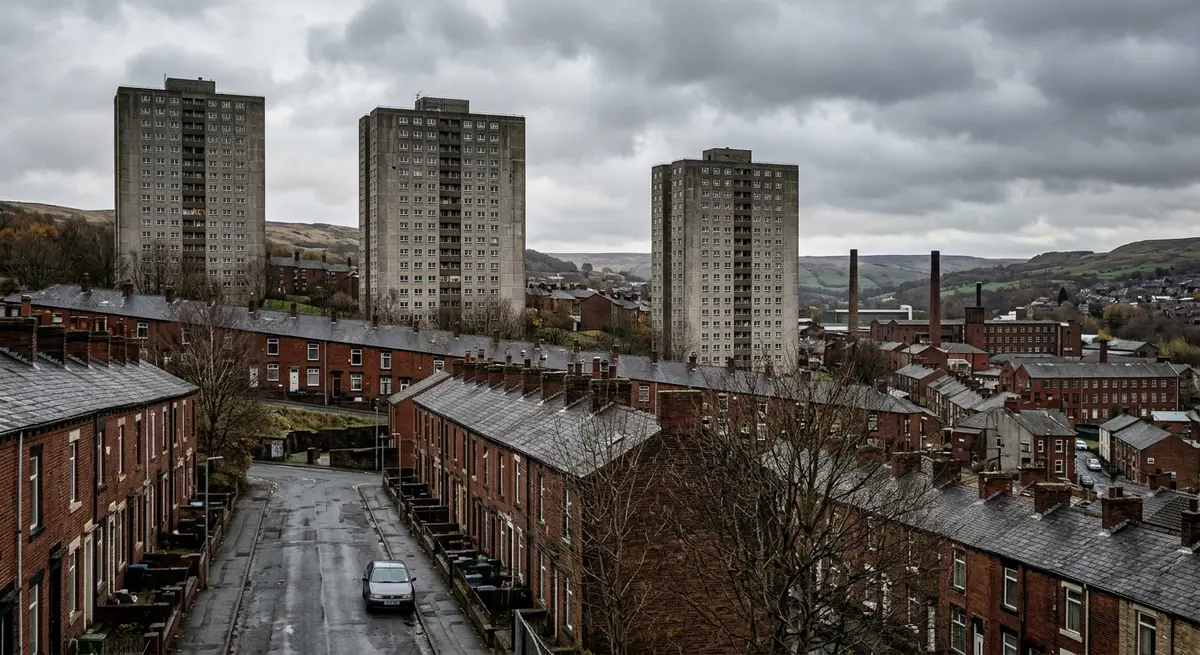
Rochdale’s Seven Sisters, the seven 1960s tower blocks that have dominated the town’s skyline for almost six decades, are to be demolished and replaced with around 600 new homes. Social landlord Rochdale Boroughwide Housing (RBH) confirmed the decision on Monday 16 November, ending a decade of uncertainty over the College Bank estate.
RBH says rebuilding is the only realistic and affordable option. Campaigners and some remaining residents say they will keep fighting to save the blocks.
Why the towers are coming down
The seven blocks hold 766 flats. Residents began moving out in October 2025 after concerns were raised about the buildings’ long-term safety, and only 78 households have yet to accept an offer of another home.
In its announcement, RBH said a feasibility study carried out in summer 2025, including structural surveys, engineering assessments and financial modelling, found that keeping and refurbishing the blocks would require substantial reconstruction. That work would cost at least £269 million and take up to 12 years, or roughly £388,000 per flat before VAT. Even then, the refurbished homes would be expected to last around 50 years.
The findings were reviewed by the College Bank Task Force, which was set up in autumn 2025 and chaired by the Mayor of Greater Manchester, with the Greater Manchester Combined Authority and Rochdale Council among its members.
RBH chief executive Amanda Newton said: “College Bank has been home to generations of Rochdalians, and we recognise the important place the blocks hold in many people’s memories.” She added that redeveloping the site was “the only realistic and affordable way to deliver the quality neighbourhood that residents deserve.”
What will replace them
RBH proposes up to 601 homes in a mix of apartment blocks and townhouses. Although that is fewer homes than today, the landlord says larger family properties mean the new scheme would provide at least 249 additional bedspaces, so more people could live on the site.
The BBC reported that RBH hopes some former residents could return once the new homes are built, although that has not yet been agreed. No demolition date has been given, and the redevelopment will need planning permission. RBH expects all remaining residents to have moved out by summer 2027.
Anger from residents and campaigners
The decision has not been welcomed by everyone. The Save the Seven Sisters group has campaigned against demolition since it was first proposed in 2016. Plans to knock the blocks down were revealed in 2017, ruled out in 2023 and then put back on the table.
Speaking to the Manchester Evening News, campaign chair Mark Slater argued that the buildings’ condition was the result of years of neglect and called for RBH to release its surveys for independent scrutiny. Joan Wainwright, a 72-year-old leaseholder in Town Mill Brow, said buy-out offers were too low to buy an equivalent home elsewhere.
Rochdale MP Paul Waugh called it “a sad day for College Bank and for Rochdale”, saying a lack of investment over many years had contributed to the situation. He said the planned consultation “needs to be genuine” and must include tenants who have already moved out.
What it means for Greater Manchester readers
The College Bank decision is one of the largest social housing regeneration choices in Greater Manchester this year. It touches on issues facing many towns across the North West: ageing post-war blocks, the soaring cost of making them safe, and the tension between preserving a community and building homes fit for the next 60 years.
For the wider housing market, the plan swaps small bedsits and one and two-bedroom flats for a mix that includes family homes, a type of affordable housing in short supply across the borough. RBH says the decision also protects its ability to keep investing in homes for its more than 12,000 customers.
What happens next
DK Architects has been appointed to draw up the new scheme. RBH plans a public consultation in the new year, with an outline planning application to Rochdale Council expected in early 2027. Staff are holding meetings with residents this week, and regular drop-in sessions continue at the Town Mill Brow community room. Campaigners have said they will lobby councillors to try to stop the demolition.

