




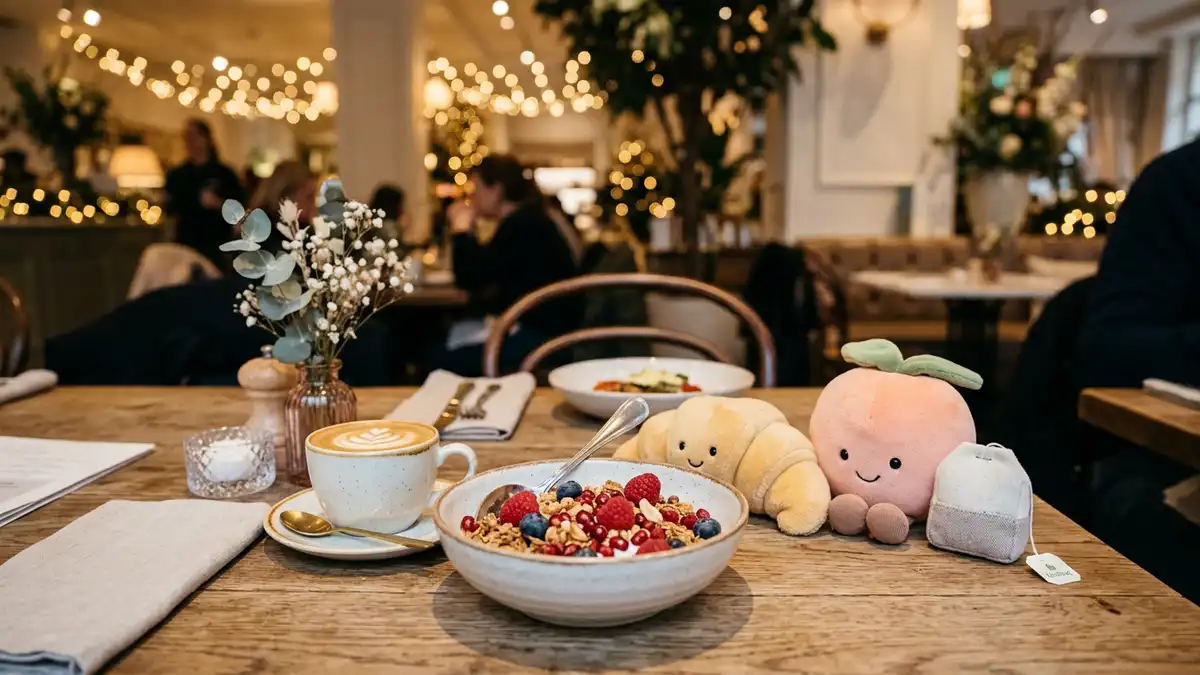
The Jellycat Brunch at Harrods opens its doors on Monday 30 November 2026, and the tables are already gone. Booking for the Knightsbridge café, the first of its kind anywhere in the world, opened in October and slots are reported to be sold out until February 2027. For a restaurant serving brunch alongside soft toys shaped like the food, that is a remarkable level of demand, and it says a good deal about how British shoppers now spend their money and their free time.
What the Jellycat Brunch at Harrods actually is
According to Harrods, the venue is a “first-of-its-kind dining destination” on the store’s ground floor, pairing an exclusive menu with new and familiar Jellycat characters. It takes over the space that was previously home to the Prada café. Diners can order a peach granola bowl and also buy a plush toy in the shape of the same dish, as reported by the Guardian on 27 November 2026.
The store lists opening hours of 9am to 9pm from Monday to Saturday, with Sunday hours that are shorter. Jellycat’s own page gives the last seating on weekdays and Saturdays as 7.45pm and Sunday opening as 12 noon to 6pm. Entry is by reservation through the Harrods booking system, and one trade report on 26 November 2026 said walk-ins would not be accepted and that late cancellations or arrivals more than 15 minutes behind time could incur a £45-per-person fee. Anyone hoping to go should check the current terms with Harrods before making plans.
The exclusive plushies
The café is also a retail drop. Characters inspired by the menu are expected to be sold only on site, which is a familiar tactic for the brand. Ahead of the opening, Harrods put another cult exclusive, the £50 Amuseables Glacy Chocolate Cake, on sale online for the first time, according to the same trade report.
The kidult boom behind the queue
The word “kidult” describes adults who buy products traditionally aimed at children for themselves, from Lego sets to Pokémon cards and, increasingly, soft toys. Market researcher Circana found that kidult toy sales in the UK grew by 22% in the first half of 2026, and that one in five toys and games is now bought by over-18s for their own use.
The trend is not new. Circana data reported by industry press earlier in the year put buyers aged over 12 at roughly 30% of the UK toy market in 2025, up from 17% in 2016. What has changed is the pace, and the way retailers now treat adult collectors as a core customer rather than an afterthought.
Why adults say they buy them
Audrey Tang, a chartered member of the British Psychological Society, told the Guardian that Jellycats are “tactile, comforting, calming and very cutesy”. She argued that a hard year for many people makes small, cheerful purchases more appealing, and rejected the idea that buying a plush toy is a sign of regression, describing that worry as a judgment often inherited from parents or carers who once said “you’re too old for this”.
Collectors tell a similar story. Rachel Dyer, a 43-year-old business support officer quoted by the Guardian, has booked a table for her tenth wedding anniversary. She started collecting in 2025 and now owns 95 plush toys, including a pine-cone tree, a fox and a cat in a parka. “They bring me a little bit of comfort, joy and escapism,” she said.
Tang also pointed to community. Events where fans meet one another give shy or lonely people an instant talking point, she said, which can ease anxiety.
Jellycat by the numbers
The financial picture helps explain why department stores are investing in experiences. Jellycat, founded in Britain in 1999, saw revenue jump 43% on the previous year to £450 million, according to figures reported in October 2026. Most of its toys sit in the £20 to £40 range, but discontinued or rare designs can fetch £500 or more on resale sites. EBay reports that Jellycat ranked fourth among the UK’s most-searched terms between January and September 2026.
Small accessories are part of the story too. Mini bag charms, such as 6cm pickles and marshmallows, are increasingly seen hanging from designer handbags, which turns a toy into a fashion item and widens the audience further.
A wave of in-person Jellycat experiences
Harrods is following a pattern. Galeries Lafayette in Paris hosts a Jellycat patisserie pop-up selling tiny plush chouquettes. KaDeWe in Berlin has run a rotisserie-themed experience, and a Texas ranch event features a bald-eagle character called Algernon. When Selfridges launched a Fish and Chips van in July 2025, customers queued for up to three hours for a plush sausage and mushy peas wrapped in a bespoke newspaper.
The craze has had a darker side. The Guardian has previously reported on a rise in “stealing to sell” shoplifting linked to the toys, and long online queues for limited launches regularly frustrate fans who cannot get through.
What it means for UK shoppers and high streets
For retailers, the lesson is that an experience can pull in footfall that a discount cannot. The Harrods launch lands in the same week as Black Friday, when shoppers are being tempted by price cuts, and the contrast is striking: the most talked-about retail event of the weekend is one that people have booked months ahead and will pay full price for.
It also arrives at a difficult time for mainstream retail. The administration of Poundland, covered in our report on Poundland’s administration and the 11,000 jobs at risk, shows how hard the value end of the market is finding the run-up to Christmas. Households are also comparing prices closely, as our look at the Aldi and Lidl Christmas dinner price war shows. Spending that is small, emotional and personal appears to be holding up better than big-ticket buying.
Should you try to get a table?
If you want to visit, the practical advice is simple. Book through the official Harrods channel only, read the cancellation terms carefully, and be wary of resale offers for reservations. Anyone who just wants a character can look at the brand’s own website and department-store stockists, where releases are usually announced in advance.
Whether the café proves a one-season novelty or a lasting format, it has already made its point. The adult toy market is no longer a niche, and Britain’s most famous department store is now serving brunch to prove it. More detail is available on the Guardian’s report on the Harrods Jellycat café and on the Harrods Jellycat Brunch page.


