




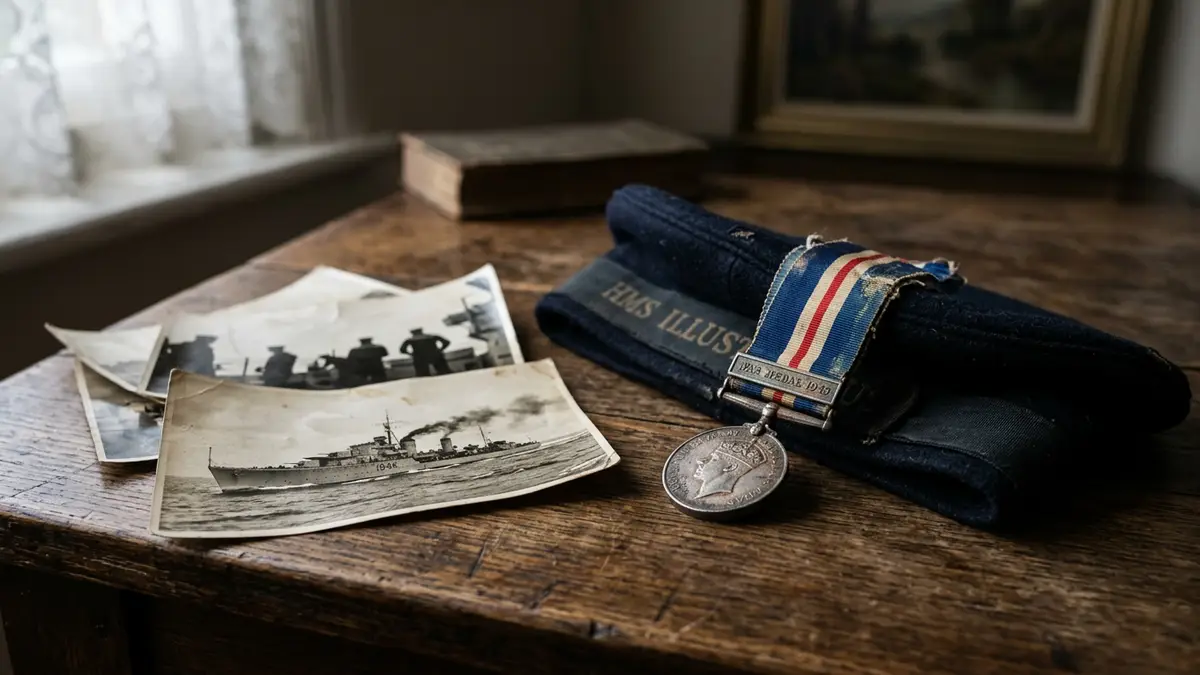
The nuclear test veterans panel announced by Prime Minister Andy Burnham on 24 November 2026 is the most significant government move yet on one of Britain’s longest-running grievances. Bishop James Jones, who chaired the Hillsborough Independent Panel, will lead a non-statutory inquiry into what happened to the servicemen who witnessed the UK’s Cold War nuclear weapons tests, and what the state knew about the risks they ran.
Burnham followed the announcement with an emotional statement to the Commons on 25 November 2026, promising an interim report by 3 October 2027, the 75th anniversary of Britain’s first atomic test. Here is what has been agreed, what is still undecided, and why campaigners, many of them in the North West, are cautiously encouraged.
What the government has announced
According to the Downing Street press release of 24 November 2026, the panel will operate independently of government and follow the model of the Hillsborough and Gosport panels. It will be supported by several panel members who are yet to be appointed.
Key points from the announcement:
- Bishop James Jones has agreed to chair the panel.
- The panel is non-statutory, meaning it is not set up under the Inquiries Act and cannot, on its own, compel witnesses.
- The Office for the Prime Minister and Cabinet will sponsor it, with First Secretary of State Louise Haigh as Sponsor Minister.
- Separate work on memorialisation, education and research, previously led by the Ministry of Defence, will move to the same office.
- Terms of reference will be agreed with the veteran community, with the government saying they will be set out by January 2027.
Burnham said in the release that nuclear test veterans and their families “have waited too long for the truth”, adding that the government “must act on the recommendations of the panel”.
Who are the nuclear test veterans?
Britain carried out dozens of nuclear explosions between 1952 and 1991, in Australia and in the Pacific, including on Christmas Island, now known as Kiritimati. Burnham told MPs that around 22,000 servicemen were involved in the tests of the 1950s and 1960s, and that most of them have since died.
Veterans’ groups say many were young conscripts who were made to watch detonations without consent, without protective equipment and without being told of the risks. They report cancers, blood disorders, miscarriages and the death of infants. Burnham pointed to the case of Archie Hart, who was 18 when his ship sailed through the fallout of two atomic clouds, and who later developed hundreds of benign tumours and an aggressive cancer.
The prime minister also said health problems appeared to have been passed down the generations, with very young grandchildren showing signs of “chalk teeth”. That claim, made from the despatch box, is central to his argument that this is “an urgent issue of now, and not just one of the past”.
Why the Hillsborough model?
The choice of a Hillsborough-style panel over a statutory public inquiry or a special tribunal was deliberate. Burnham told the Commons that a tribunal would have needed legislation, and that “time is not on our side and it’s not on their side. Our nuclear test veterans will not be with us forever.”
The Hillsborough Independent Panel, which reported in 2012, did not hold hearings in the usual sense. It reviewed documents, opened archives and worked closely with families, producing findings that led to an apology from the then prime minister, David Cameron, in the Commons. Burnham referred to that precedent directly, noting he worked with Cameron on it, and saying he had considered apologising on 25 November but would prefer a “full, meaningful apology” once the report was published, so it would not seem “glib or not serious”.
The speed is the attraction. The trade-off is power. Campaign groups have said they want the terms of reference to include access to Ministry of Defence records and the ability to compel witnesses, according to reporting by The Guardian. The government has instead pointed to the forthcoming Public Office (Accountability) Bill, often called the Hillsborough Law, which will place a legal duty of candour on public officials. Once the bill completes its passage, it will apply to the panel, and Burnham has said he expects the government to act in the spirit of that duty immediately.
The cover-up allegation
The announcement lands amid long-standing claims that the state concealed evidence. Guardian reporting notes that the former defence minister Tobias Ellwood admitted in September 2026 that he had unwittingly misled Parliament in 2018 over the existence of crucial medical records relating to the tests.
Wes Streeting went further when asked about the issue, saying there had been a “cover-up”. Burnham was more careful, saying the panel should not be prejudged and must “lead where the facts take them” and “proceed without fear or favour”, but adding that Bishop Jones’s work would help ensure that any cover-up is exposed.
The prime minister drew explicit parallels with other scandals in which official institutions were slow to believe those harmed: infected blood, the Post Office Horizon prosecutions and Hillsborough itself. It is a framing that signals how personally he regards the case.
Compensation and an apology: what is still open
Two questions dominated the Commons exchanges on 25 November 2026. The first was compensation. Conservative leader Kemi Badenoch asked whether any money had been set aside, and Liberal Democrat leader Sir Ed Davey pressed Burnham on the same point. The prime minister did not rule it out, but said it was a matter for later. He told Badenoch that “we should go wherever the truth takes us and we should make whatever recompense is needed”, and told Davey he was “not in any way walking away from the question of compensation”, but that it is “each step in its time”.
The second was an apology. Burnham said he would deliver one in person, around 3 October 2027, once the interim report arrives. For veterans in their eighties and nineties, that is a long wait, though campaigners had themselves proposed an interim report and a memorial by that date.
Badenoch broadly welcomed the statement, while also urging Burnham to revisit provisions in the Northern Ireland Troubles bill that she argued affect another group of elderly veterans. He said that debate was for another day.
Why it matters in Greater Manchester and the North West
Many of the veterans and families who campaigned come from the North West, as ITV News Granada reported. Liverpool and Greater Manchester have sizeable ex-service communities, and Burnham, a former Mayor of Greater Manchester and now MP for Makerfield, has long been identified with northern campaigns for state accountability.
The University of Liverpool said its Centre for People’s Justice, which has worked with the nuclear veteran community, contributed to the push for the panel. Descendants, such as Steve Owen, whose father took part in Operation Dominic on Christmas Island in 1962, said the choice of chair was “massive for us”, particularly because they wanted the duty of candour to apply.
The wider political picture
The statement came at the end of a combative Prime Minister’s Questions, where Badenoch and Burnham clashed over the government’s new EU deal and university fees for EU students, and where Plaid Cymru challenged him over rejecting further devolution for Wales. The Guardian’s politics live blog judged the veterans’ statement more revealing than the exchanges that preceded it.
It also arrives while the government is wrestling with welfare reform. Our readers can follow that debate in our opinion piece on the Timms review of Pip, and the shifting alliances on the right in our report on the Farage and Restore Britain pact.
What happens next
- By January 2027: panel membership and terms of reference to be agreed with the veteran community.
- Before 3 October 2027: interim report, with a statement and apology from the prime minister expected around that date.
- After the interim report: final findings, with ministers saying they will act on the recommendations; compensation to be considered once the facts are established.
The test of the panel will be whether the Ministry of Defence opens its archives fully and quickly, and whether the duty of candour is honoured before it is law. For a community that has fought for recognition for decades, and which received a medal in 2022 but, in Burnham’s words, not the “truth in your heart”, the next ten months will show whether a Hillsborough-style process can deliver answers before time runs out for the survivors.


