




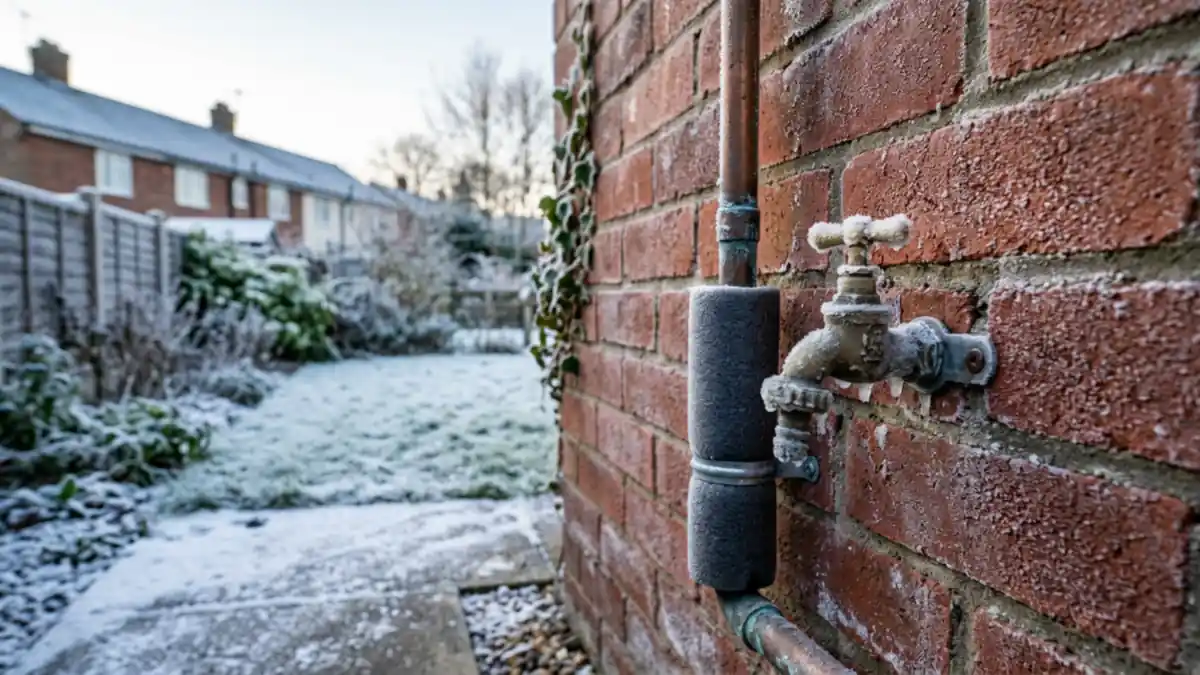
Frozen pipes are the most common and most costly winter problem for British homes, and with the coldest spell of the autumn so far gripping much of the country, water companies and engineers are urging households to act before the next hard frost. The warnings come as forecasters predict more ice and hill snow this week across northern England, including Greater Manchester and the wider North West.
The good news is that most damage from burst pipes is avoidable with a few cheap checks and an hour or two of work. Here is what is happening with the weather, why pipes fail in the cold, and the steps that make the biggest difference.
Cold snap brings the first real test of winter
The Met Office recorded the lowest temperatures of the season so far in the days leading up to 24 November 2026. Tulloch Bridge in the Scottish Highlands fell to minus 10.6C in the early hours of Saturday 21 November, beating the previous autumn low set the night before. Frost and freezing fog reached many towns and cities, and forecasters said overnight lows of around minus 1C were possible even in urban areas such as Manchester.
The UK Health Security Agency issued yellow cold-health alerts for the North West, the North East and Yorkshire and the Humber, with the latest running until 9am on Tuesday 24 November. In its forecast published on 24 November, BBC Weather said Arctic air to the north and east would keep Scotland and northern and eastern England colder than average for much of the week, with the risk of hill snow, freezing rain and ice, before another weather system brings rain that could temporarily turn to snow over northern hills.
The longer-range outlook is also worth watching. The Met Office has said that a strong El Niño in the Pacific raises the chances of a colder and drier spell later in the winter, although it stresses these are probabilities rather than a firm forecast. Manchester Times has looked at what this year’s El Niño could mean for UK weather.
Why frozen pipes burst
Water expands by around nine per cent as it turns to ice. When that happens inside a pipe, pressure builds between the ice plug and the nearest closed tap or valve until the pipe or a joint gives way. Often the split goes unnoticed while the pipe is still frozen. The real damage begins during the thaw, when water starts flowing again and pours through the crack into lofts, ceilings, walls and floors.
The pipes most at risk are those in unheated spaces: lofts, garages, cellars, under-floor voids, outbuildings and anywhere a pipe runs along an outside wall. Outdoor taps, condensate pipes from modern condensing boilers and water tanks in the loft are also frequent casualties.
Repairing a burst pipe can be quick, but drying out a house and replacing damaged plaster, flooring and electrics can take weeks and run into thousands of pounds, which is why insurers and water firms put so much emphasis on prevention.
Three checks United Utilities wants every household to make
United Utilities, which supplies water to around seven million people across the North West, launched its winter campaign on 17 November 2026 with ITV weather presenter Jo Blythe and DIY expert Craig Phillips. The company is asking customers to carry out three simple checks now rather than waiting for a cold night.
1. Lag exposed pipes
Foam pipe lagging is cheap, sold at every DIY shop and simple to fit: it slips over the pipe and is taped at the joins. Concentrate on pipes in the loft, garage and any other cold spot, along with the cold water tank in the loft if you have one. Leave the area directly under a loft tank uninsulated so a little warmth can rise from the rooms below.
2. Find your stop tap and test it
The stop tap, sometimes called a stopcock, shuts off the water supply to the whole house. It is usually under the kitchen sink but can be in a downstairs toilet, utility room, garage or cellar. United Utilities says knowing where it is, and making sure it turns freely, can save valuable minutes in an emergency. If it is stiff, a few gentle turns back and forth now is far better than discovering it has seized while water is coming through the ceiling.
3. Never switch the heating off completely when you are away
A low or frost setting keeps enough warmth in the house to stop pipes freezing while keeping energy use down. Grant Batty, water services director at United Utilities, said the company knew winter could be a worrying time for customers on stretched budgets, and that a few preventive steps now could avoid the inconvenience and expense that frozen or burst pipes cause.
How low can you set the heating?
With energy prices expected to rise sharply from 1 January 2027, many households will be tempted to turn the heating off altogether. British Gas advised on 17 November that homes left empty should not be allowed to fall below about 5C to 7C, a level designed to protect pipes and the fabric of the building without running up large bills. The NHS recommends heating occupied rooms to at least 18C in winter, particularly for older people and anyone with a health condition.
Peter Knowles, a British Gas service and repair engineer, said it was easy to put off home maintenance jobs after a warm summer, but that getting ahead before winter set in could make all the difference.
A winter home maintenance checklist
Beyond the three headline checks, engineers and water companies recommend a short list of jobs that reduce the risk of a breakdown or a flood during cold weather:
- Check the boiler pressure. Most combi boilers should read between 1 and 1.5 bar when cold. If it has dropped, the manual will explain how to top it up using the filling loop.
- Bleed radiators. Cold patches at the top of a radiator mean trapped air, which reduces heat output and makes the boiler work harder.
- Protect the condensate pipe. The small plastic pipe that carries water away from a condensing boiler often runs outside and is a common reason boilers lock out in a freeze. Larger-diameter pipe and lagging both help.
- Turn off and drain outdoor taps. If there is an isolating valve inside, close it and open the outside tap to empty it, or fit an insulated tap cover.
- Clear gutters and drains. Blocked gutters can overflow, freeze and force water into walls and roof spaces.
- Seal draughts. Gaps around doors and windows let warm air escape and make it harder to keep pipes near outside walls above freezing.
- Open cupboard doors under sinks on outside walls during very cold nights so warmer air can reach the pipes.
Better insulation of the house as a whole also protects pipes, although support for bigger upgrades is shifting. Our report on insulation grants and the Warm Home Discount changes explains what help is available this winter.
What to do if a pipe freezes or bursts
If you turn on a tap and nothing comes out, or only a trickle, during freezing weather, a frozen pipe is the likely cause. Check whether neighbours have water: if they do, the problem is probably inside your property.
If the pipe is frozen but not leaking
- Turn off the water at the stop tap.
- Open the tap the pipe feeds so water can escape as it thaws.
- Thaw the pipe gently, starting from the tap end, with a hot water bottle, a hairdryer on a low setting or warm towels.
- Never use a blowtorch or any naked flame, and do not pour boiling water directly onto pipes.
If a pipe has burst
- Turn off the water at the stop tap immediately.
- If water is near electrical fittings or sockets, switch off the electricity at the consumer unit and do not touch anything electrical if it is wet.
- Open all cold taps to drain the system and reduce the amount of water escaping.
- Move valuables out of the way, catch drips in buckets and take photographs for your insurer.
- Call a qualified plumber. Pipework inside your home and on your side of the boundary is usually the homeowner’s responsibility, while a leak on the public side should be reported to the water company.
Water companies run Priority Services Registers for older and disabled customers and others who may need extra help if supplies are interrupted. It is free to join, and anyone in a vulnerable situation is encouraged to sign up before the coldest weeks of winter.
Check your insurance before you need it
Most buildings insurance policies cover escape of water, but many include conditions for properties left unoccupied for more than a set number of days, often requiring the heating to be kept on or the water drained down. Anyone travelling over Christmas or leaving a property empty, including landlords between tenants, should read the small print now.
The bottom line
Frozen pipes are a problem that rewards preparation. Lagging, a working stop tap and a heating frost setting cost very little compared with the disruption of a flood in the middle of winter. With the cold spell expected to continue across northern England through the rest of the week, and energy bills due to climb from January, the next few days are the right time to get those checks done.

